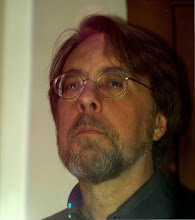
My colleague Ellery Eells died on the 10th of this month, succumbing to an illness of apparently long duration.
I probably knew him longer than anyone in my department. (That would mean that I was the first to be able to pronounce his name: like the plural of the letter "L.") He and I were known to each other when I was a graduate student and he was an undergraduate, at UC Santa Barbara in the 1970s. I kept hearing about this brilliant senior, from whom people (quite rightly, this time) expected fine things. I remember clearly one day I was with a faculty friend of mine, Dennis Couzin, as he checked his mail. The students in his class on the metaphysics of time were handing in their term papers. Ellery's was on top of the pile. Dennis immediately, and I mean without a second's pause, sat down and read it. I said something about this surprising behavior of his, and he just said: "I want to learn the stuff!" He even read it aloud to me. The first sentence, as I recall, was a very elegant statement of sense in which time at least appears to be a series and a series, moreover, that has a direction.
Despite his considerable talents, he was, entirely lacking in the vices that often afflict extremely smart people. He was, as many have said and will say again, extremely modest and patient.
I hope you will excuse the egocentric reflection, but I keep thinking of the fact that he was seven years younger than I am. Gather ye rosebuds, and make it fast!
Tuesday, August 22, 2006


Thursday, July 13, 2006
Oh no! Not another free speech case at UW!
Yea, oh my sisters and my brothers, ye shall always have them with you!
Pasted in below is a statement published as part of a press release by the University. I signed it, along with six or seven other people, but it was written by Donald Downs.
Anyway, here it is:
The Barrett Case and Academic Freedom at Wisconsin
By now, many people have heard about the recent academic freedom conflict at the University of Wisconsin, Madison. On July 11, Provost Patrick Farrell refused to fire Kevin Barrett, who is contracted to teach a course in the fall on Islam, Religion and Culture. Farrell’s decision has caused uproar because Barrett is a proponent of a bizarre conspiracy theory: that the attacks on America on September 11, 2001 were perpetrated not by jihadist terrorists, but rather by the government of the United States. That’s right: we did it to ourselves. When Barrett’s dedication to this theory became known, numerous people, including some state politicians, issued strident calls for Barrett’s immediate termination.
The main argument against retaining Barrett is that anyone who believes in this conspiracy lacks the competence to teach a class at a major university. But when the dust settles, some fundamental principles of academic freedom support the Provost’s decision.
First, Farrell’s investigation of Barrett’s course and previous lecturing experience indicated that Barrett, regardless of his beliefs concerning 9/11, would teach the course responsibly, and that students had rated him a decent teacher. If the relevant department (in this case, Languages and Cultures of Asia) had decided against offering Barrett the one course contract in the first place because of its assessment of his scholarship and teaching, that would have been the department’s choice to make, based on its own academic judgment. But that is not the situation that we confront.
Second, firing Barrett from his one course contract for this fall in the face of political pressure would set a bad precedent. Indeed, it would constitute the first time in anyone’s memory that the University fired an instructor—hired by a department through the normal channels—before the termination of his contract because of political pressures exerted on account of the instructor’s views. Even those who agree with Barrett’s strongest critics on substantive grounds should pause before opening this Pandora’s Box. Not allowing Barrett to teach according to the limited terms of his contract would mean that members of the media and legislature could dictate who teaches and who gets fired based upon these outsiders’ agreement or disagreement with the conclusions certain teachers reach. Though universities are hardly infallible in making their hiring decisions, such a precedent would seriously compromise the wide open pursuit of truth for which the University properly stands.
Conservatives in the legislature need to remember that the principle of academic freedom protects the right as well as the left. And for most of the last fifteen years, it is the right that has needed protection. During the 1990s, Wisconsin and many other schools enacted speech codes and related policies that they applied almost exclusively against conservatives who expressed ideas that conflicted with the agendas of political correctness. In reaction to these threats to academic freedom and free speech, several faculty members and students at Wisconsin forged a movement that has aggressively and successfully defended academic freedom across the board. Our movement (based on the independent Committee for Academic Freedom and Rights) was instrumental in causing the demise of the faculty speech code in 1999, and in defending the rights of several individuals who had run afoul of the dictates of political correctness. We have also aggressively supported the conservative Badger Herald several times when that paper came under attack for publishing cartoons deemed politically incorrect. Last spring, for example, we took a strong stand defending the Herald’s right to publish one of the notorious cartoons of Mohammed that had generated such controversy in Europe—a stance backed up by Chancellor John Wiley, who has striven to defend academic freedom and free speech of both the right and the left since he became Chancellor in 2000.
In thinking about Provost Farrell’s decision, we should keep in mind the words of Alexander Meiklejohn, the famous philosopher of free speech, citizenship, and education who founded the Integrated Liberal Studies program at Wisconsin. “To be afraid of an idea—any idea—is to be unfit for self-government.” In the long run, defending Barrett’s right to teach this one course is necessary if we want to defend something that is a lot more important than this one conspiracy theorist.
Pasted in below is a statement published as part of a press release by the University. I signed it, along with six or seven other people, but it was written by Donald Downs.
Anyway, here it is:
The Barrett Case and Academic Freedom at Wisconsin
By now, many people have heard about the recent academic freedom conflict at the University of Wisconsin, Madison. On July 11, Provost Patrick Farrell refused to fire Kevin Barrett, who is contracted to teach a course in the fall on Islam, Religion and Culture. Farrell’s decision has caused uproar because Barrett is a proponent of a bizarre conspiracy theory: that the attacks on America on September 11, 2001 were perpetrated not by jihadist terrorists, but rather by the government of the United States. That’s right: we did it to ourselves. When Barrett’s dedication to this theory became known, numerous people, including some state politicians, issued strident calls for Barrett’s immediate termination.
The main argument against retaining Barrett is that anyone who believes in this conspiracy lacks the competence to teach a class at a major university. But when the dust settles, some fundamental principles of academic freedom support the Provost’s decision.
First, Farrell’s investigation of Barrett’s course and previous lecturing experience indicated that Barrett, regardless of his beliefs concerning 9/11, would teach the course responsibly, and that students had rated him a decent teacher. If the relevant department (in this case, Languages and Cultures of Asia) had decided against offering Barrett the one course contract in the first place because of its assessment of his scholarship and teaching, that would have been the department’s choice to make, based on its own academic judgment. But that is not the situation that we confront.
Second, firing Barrett from his one course contract for this fall in the face of political pressure would set a bad precedent. Indeed, it would constitute the first time in anyone’s memory that the University fired an instructor—hired by a department through the normal channels—before the termination of his contract because of political pressures exerted on account of the instructor’s views. Even those who agree with Barrett’s strongest critics on substantive grounds should pause before opening this Pandora’s Box. Not allowing Barrett to teach according to the limited terms of his contract would mean that members of the media and legislature could dictate who teaches and who gets fired based upon these outsiders’ agreement or disagreement with the conclusions certain teachers reach. Though universities are hardly infallible in making their hiring decisions, such a precedent would seriously compromise the wide open pursuit of truth for which the University properly stands.
Conservatives in the legislature need to remember that the principle of academic freedom protects the right as well as the left. And for most of the last fifteen years, it is the right that has needed protection. During the 1990s, Wisconsin and many other schools enacted speech codes and related policies that they applied almost exclusively against conservatives who expressed ideas that conflicted with the agendas of political correctness. In reaction to these threats to academic freedom and free speech, several faculty members and students at Wisconsin forged a movement that has aggressively and successfully defended academic freedom across the board. Our movement (based on the independent Committee for Academic Freedom and Rights) was instrumental in causing the demise of the faculty speech code in 1999, and in defending the rights of several individuals who had run afoul of the dictates of political correctness. We have also aggressively supported the conservative Badger Herald several times when that paper came under attack for publishing cartoons deemed politically incorrect. Last spring, for example, we took a strong stand defending the Herald’s right to publish one of the notorious cartoons of Mohammed that had generated such controversy in Europe—a stance backed up by Chancellor John Wiley, who has striven to defend academic freedom and free speech of both the right and the left since he became Chancellor in 2000.
In thinking about Provost Farrell’s decision, we should keep in mind the words of Alexander Meiklejohn, the famous philosopher of free speech, citizenship, and education who founded the Integrated Liberal Studies program at Wisconsin. “To be afraid of an idea—any idea—is to be unfit for self-government.” In the long run, defending Barrett’s right to teach this one course is necessary if we want to defend something that is a lot more important than this one conspiracy theorist.
Wednesday, July 05, 2006
Independence Day Message
The following essay was circulating the internet this July Fourth.
I cannot vouch for the scholarship in it, but it does pack a whollop, so I'm entering it below:
~~~~~~~~~~~~~~~
Have you ever wondered what happened to the 56 men who signed the Declaration of Independence?
Five signers were captured by the British as traitors, and tortured before they died.
Twelve had their homes ransacked and burned.
Two lost their sons serving in the Revolutionary Army; another had two sons captured.
Nine of the 56 fought and died from wounds or hardships of the Revolutionary War. They signed and they pledged their lives, their fortunes, and their sacred honor.
What kind of men were they?
Twenty-four were lawyers and jurists.Eleven were merchants, nine were farmers and large plantation owners; men of means, well educated, but they signed the Declaration of Independence knowing full well that the penalty would be death if they were captured.
Carter Braxton of Virginia, a wealthy planter and trader, sa! w his ships swept from the seas by the British Navy. He sold his home and properties to pay his debts, and died in rags.
Thomas McKeam was so hounded by the British that he was forced to move his family almost constantly. He served in the Congress without pay, and his family was kept in hiding. His possessions were taken from him, and poverty was his reward.
Vandals or soldiers looted the properties of Dillery, Hall, Clymer, Walton, Gwinnett, Heyward, Ruttledge, and Middleton.
At the battle of Yorktown, Thomas Nelson, Jr., noted that the British General Cornwallis had taken over the Nelson home for his headquarters. He quietly urged General George Washington to open fire. The home was destroyed, and Nelson died bankrupt.
Francis Lewis had his home and properties destroyed. The enemy jailed his wife, and she died within a few months.
John Hart was driven from his wife's bedside as she was dying. Their 13 children fled for their lives. His fields and his gristmill were laid to waste. For more than a year he lived in forests and caves, returning home to find his wife dead and his children vanished.
Some of us take these liberties so much for granted, but we shouldn't. So, take a few minutes while enjoying your 4th of July holiday and silently thank these patriots. It's not much to ask for the price they paid.
Remember: freedom is never free!
I cannot vouch for the scholarship in it, but it does pack a whollop, so I'm entering it below:
~~~~~~~~~~~~~~~
Have you ever wondered what happened to the 56 men who signed the Declaration of Independence?
Five signers were captured by the British as traitors, and tortured before they died.
Twelve had their homes ransacked and burned.
Two lost their sons serving in the Revolutionary Army; another had two sons captured.
Nine of the 56 fought and died from wounds or hardships of the Revolutionary War. They signed and they pledged their lives, their fortunes, and their sacred honor.
What kind of men were they?
Twenty-four were lawyers and jurists.Eleven were merchants, nine were farmers and large plantation owners; men of means, well educated, but they signed the Declaration of Independence knowing full well that the penalty would be death if they were captured.
Carter Braxton of Virginia, a wealthy planter and trader, sa! w his ships swept from the seas by the British Navy. He sold his home and properties to pay his debts, and died in rags.
Thomas McKeam was so hounded by the British that he was forced to move his family almost constantly. He served in the Congress without pay, and his family was kept in hiding. His possessions were taken from him, and poverty was his reward.
Vandals or soldiers looted the properties of Dillery, Hall, Clymer, Walton, Gwinnett, Heyward, Ruttledge, and Middleton.
At the battle of Yorktown, Thomas Nelson, Jr., noted that the British General Cornwallis had taken over the Nelson home for his headquarters. He quietly urged General George Washington to open fire. The home was destroyed, and Nelson died bankrupt.
Francis Lewis had his home and properties destroyed. The enemy jailed his wife, and she died within a few months.
John Hart was driven from his wife's bedside as she was dying. Their 13 children fled for their lives. His fields and his gristmill were laid to waste. For more than a year he lived in forests and caves, returning home to find his wife dead and his children vanished.
Some of us take these liberties so much for granted, but we shouldn't. So, take a few minutes while enjoying your 4th of July holiday and silently thank these patriots. It's not much to ask for the price they paid.
Remember: freedom is never free!
Friday, June 23, 2006
Why Zweig Still Matters
Early in 1942 something happened that will probably never be fully explained, though some of the reasons for it are obvious. Stefan Zweig the expatriate Viennese author and his second wife, Lotte, had settled in Brazil, in the mountain town of Petropolis. They were visiting Rio to see the Carnival. On February 16, Shrove Tuesday, Stefan was shocked to read of the fall of Singapore to the Japanese two days earlier and, in the same newspaper, of the advances made by the Germans in their drive across North Africa toward the Suez Canal. Zweig and Lotte cut their visit to the Carnival short, returning to their rented house in Petropolis. He came back to Rio only once, to give a copy of his will to his attorney, together with an envelope full of valuable autograph documents and drawings. In the envelope was a note in French to a friend, in which he said:
Later, when the friend found the note, he was in a position to realize that it was in effect a suicide note. Zweig wrote many farewell letters, put manuscripts, including his last work of fiction and draft chapters of the never-to-be-finished book on Montaigne, in envelopes. After attending to every detail, not omitting postage for their last letters, and even sharpening the pencils on Zweig’s desk, he and Lotte lay down on their bed and took massive doses of veronal, a sleep medication.
I have long believed that, for people who love either peace or freedom, 1942 was the absolute nadir of human development. To Zweig, who loved liberty and was a pacifist, it must have seemed the deepest midnight of the soul. For my own part, as I look back at the Americans of that period, people whose view of the world was expressed by the folksy banter of Fred Allen and the shallow bouncy cheerfulness of Glen Miller, they simply seem insane to me. The Greatest Generation? Don’t make me larf! At a certain level, the suicide of the Zweigs is not really a mystery. If there had been more insight in the world 1942, there would have been more suicides. Of course, we now know that year was a turning point, that things have gotten better ever since. But Zweig could not have known that. Prophecy is not part of human insight.
One of the principal themes of Zweig’s work was an aching nostalgia for the cultural world that was destroyed, you might say deliberately executed, by the previous war, World War I. One cause for this nostalgia was aesthetic. Although Zweig was familiar with modernist developments in the arts and considered Alban Berg a friend, Zweig’s own work represents, so to speak, a road not taken, much more closely related to the naturalism and romanticism of the nineteenth century than was path taken by his modernist colleagues. Together with his friend Richard Strauss, he was one of the very few representatives of this great tradition left alive. As a living tradition it, together with the “musical rhythm” he said it had once imparted to Viennese life, was a thing of the distant and ever-receding past. Artistically, he felt he was a man whose time had come and gone
Another cause for aching nostalgia, for Zweig, was that the lost world was in a certain way far freer than the new one. In his memoir, appropriately titled The World of Yesterday, he tells how he would sometimes amaze young people during the late nineteen thirties by telling them that during the pre-war years he traveled all over Europe and as far as India and America without ever being asked for a passport, indeed without ever having seen one. A Russian emigre once said to him that formerly a human being was a body and a soul, while today you are not treated as a human being unless you have a body, a soul, and a passport. Another Viennese Jew, born the same year as Zweig, often emphasized the same aspects of the pre-war period: the economist Ludwig von Mises.) Zweig maintained that, while it is true that the young of his generation were oppressed by morality (what we in the English-speaking world call Victorian morality), it is also true that the young of today (1942) are oppressed by the State.
There are at least two reasons why Zweig, for long an almost forgotten author, now matters more than ever. Surely we can now see that twentieth century statism was a nightmare from which we are now finally beginning to awaken. He was right about that one, and we were wrong. Again, now that the modernist experiment has been carried out, can’t we now see what a failure it was? The most recent piece of classical music that is still being performed on a regular basis in concert halls is the “Four Last Songs,” by Zweig’s fellow-anti-modernist, Richard Strauss. I don't think it is quite a coincidence that they were created in the same year as the great Zweig-based film, "Letter from an Unknown Woman": 1948. As far as classical music concert-goers are concerned, the half-century since that time was almost completely wasted. And what a collossal tragic waste that is. Just think of the musical works that were created in the last half of the nineteenth century! Surely Zweig was right, at least partly right, about that one as well.
Now, there is reason to think that interest in Zweig is on the rise again. Maybe he is a man whose time has come back!
You know how tired of life I was after losing my homeland, Austria, and could not any longer find true life in my work, living as a nomad and feeling myself grow old more by my inward sufferings than by the years.
Later, when the friend found the note, he was in a position to realize that it was in effect a suicide note. Zweig wrote many farewell letters, put manuscripts, including his last work of fiction and draft chapters of the never-to-be-finished book on Montaigne, in envelopes. After attending to every detail, not omitting postage for their last letters, and even sharpening the pencils on Zweig’s desk, he and Lotte lay down on their bed and took massive doses of veronal, a sleep medication.
I have long believed that, for people who love either peace or freedom, 1942 was the absolute nadir of human development. To Zweig, who loved liberty and was a pacifist, it must have seemed the deepest midnight of the soul. For my own part, as I look back at the Americans of that period, people whose view of the world was expressed by the folksy banter of Fred Allen and the shallow bouncy cheerfulness of Glen Miller, they simply seem insane to me. The Greatest Generation? Don’t make me larf! At a certain level, the suicide of the Zweigs is not really a mystery. If there had been more insight in the world 1942, there would have been more suicides. Of course, we now know that year was a turning point, that things have gotten better ever since. But Zweig could not have known that. Prophecy is not part of human insight.
One of the principal themes of Zweig’s work was an aching nostalgia for the cultural world that was destroyed, you might say deliberately executed, by the previous war, World War I. One cause for this nostalgia was aesthetic. Although Zweig was familiar with modernist developments in the arts and considered Alban Berg a friend, Zweig’s own work represents, so to speak, a road not taken, much more closely related to the naturalism and romanticism of the nineteenth century than was path taken by his modernist colleagues. Together with his friend Richard Strauss, he was one of the very few representatives of this great tradition left alive. As a living tradition it, together with the “musical rhythm” he said it had once imparted to Viennese life, was a thing of the distant and ever-receding past. Artistically, he felt he was a man whose time had come and gone
Another cause for aching nostalgia, for Zweig, was that the lost world was in a certain way far freer than the new one. In his memoir, appropriately titled The World of Yesterday, he tells how he would sometimes amaze young people during the late nineteen thirties by telling them that during the pre-war years he traveled all over Europe and as far as India and America without ever being asked for a passport, indeed without ever having seen one. A Russian emigre once said to him that formerly a human being was a body and a soul, while today you are not treated as a human being unless you have a body, a soul, and a passport. Another Viennese Jew, born the same year as Zweig, often emphasized the same aspects of the pre-war period: the economist Ludwig von Mises.) Zweig maintained that, while it is true that the young of his generation were oppressed by morality (what we in the English-speaking world call Victorian morality), it is also true that the young of today (1942) are oppressed by the State.
There are at least two reasons why Zweig, for long an almost forgotten author, now matters more than ever. Surely we can now see that twentieth century statism was a nightmare from which we are now finally beginning to awaken. He was right about that one, and we were wrong. Again, now that the modernist experiment has been carried out, can’t we now see what a failure it was? The most recent piece of classical music that is still being performed on a regular basis in concert halls is the “Four Last Songs,” by Zweig’s fellow-anti-modernist, Richard Strauss. I don't think it is quite a coincidence that they were created in the same year as the great Zweig-based film, "Letter from an Unknown Woman": 1948. As far as classical music concert-goers are concerned, the half-century since that time was almost completely wasted. And what a collossal tragic waste that is. Just think of the musical works that were created in the last half of the nineteenth century! Surely Zweig was right, at least partly right, about that one as well.
Now, there is reason to think that interest in Zweig is on the rise again. Maybe he is a man whose time has come back!
Monday, May 15, 2006
At Last! A Decent Nozick Page!
I've often wondered why the internet has so few resources about Robert Nozick. After all, his GAQ (Geek Attracting Quotient) must be very high, for a number of reasons: that he was obviously very smart, that he obviously had a lot of fun being smart, that his theories are decorated with fancy math-based whistles and bells, that he was a libertarian. Why doesn't the geekosphere treat him like royalty, I wondered. But that was yesterday, this is today. Now the good Julian Sanchez, formerly a philosophy student at NYU (I think) and now an editor at Reason is building a Nozick web page, and it promises to be good. Click on the above link and hear parts of his last major interview. And wonder why the good die young.
Sunday, April 09, 2006
Camille Paglia at the Wisconsin Union Theater on Tuesday!
Camille Paglia, one of my idols, is speaking on “Art and Politics in Literary Criticism” at the Union Theater in the Memorial Union on Tuesday, that's April 11, at 7:30 p.m. Here is an image of the poster publicizing the event.
Paglia is University Professor of Humanities and Media Studies at the University of the Arts in Philadelphia. She is the author of Sexual Personae: Art and Decadence from Nefertiti to Emily Dickinson; Sex, Art, and American Culture; Vamps & Tramps: New Essays; and The Birds, a study of Alfred Hitchcock. Her fifth book, Break, Blow, Burn: Camille Paglia Reads Forty-Three of the World's Best Poems became an surprize national bestseller.
The occasion of her talk is the last of these books, which takes an approach toward understanding poetry that is quite different from the one now fashionable. Her methodology is in some ways traditional, almost old-fashioned, but in her hands it is undeniably interesting and insightful.
If we are very, very lucky, this book will encourage people who teach literature go back to doing close readings of texts, and forget about "doing theory" (which is obviously not the thing that almighty God designed them to do!).
Paglia is University Professor of Humanities and Media Studies at the University of the Arts in Philadelphia. She is the author of Sexual Personae: Art and Decadence from Nefertiti to Emily Dickinson; Sex, Art, and American Culture; Vamps & Tramps: New Essays; and The Birds, a study of Alfred Hitchcock. Her fifth book, Break, Blow, Burn: Camille Paglia Reads Forty-Three of the World's Best Poems became an surprize national bestseller.
The occasion of her talk is the last of these books, which takes an approach toward understanding poetry that is quite different from the one now fashionable. Her methodology is in some ways traditional, almost old-fashioned, but in her hands it is undeniably interesting and insightful.
If we are very, very lucky, this book will encourage people who teach literature go back to doing close readings of texts, and forget about "doing theory" (which is obviously not the thing that almighty God designed them to do!).
Thursday, March 23, 2006
Why I am Opposed to Multiculturalism
In a book review he wrote a while back, John Derbyshire said:
What happened between Derbyshire's childhood and the educational regime to which children are subjected today? The answer of course is "multiculturalism," the idea that all cultures are equally good -- or at least equally un-bad.
Right now this is a very influential idea. Why? I think the main reason is that a lot of people think that it is the only alternative to chauvinism -- the idea that all cultures that are different from one's own are inferior to it.
Isn't it a little obvious that multiculturalism is not the only alternative to chauvinism? In my opinion, they are actually two forms of the very same mistake: the moralistic fallacy of deciding what the value of something is without sufficient regard for the facts. Multiculturalists edit out facts that are unfavorable to others. Chauvinists edit out facts that are embarrassing to themselves. Both are behaving irrationally.
There is an obvious alternative to both: the modern, scientific world view that has dominated Western thinking for the last century or so(at least until recently). According to this view, whatever your moral evaluation of the world might be, it should be based on the facts. If you find another culture that you can learn from, admit it. If you encounter one that, on reflection, you think is wrong, then admit that too. In neither case should you say "Eeek!" and cover your eyes.
I, too, "celebrate diversity," but I hold that the diverse individuals, corportate bodies, and peoples of the earth are related to one another by varying degrees of contrariety, opposition, and competition. This world that we live in, with its lavish variety of types, is an arena of competition, and not a giant group-hug. In such a world, the only way to think that diverse ways of life are all equally good would be to deny that they are really all that diverse. And this of course is Derbyshire's point.
In the Empire Boys' Annuals of my own British childhood, the human world was a diverse place indeed, populated by head-hunters, cannibals, Polynesian bungee-jumpers, ferocious Gurkhas, exquisitely polite Japanese, reed dwellers, cave dwellers, tree dwellers, suttees, thuggees, fellows who inserted four-inch wooden disks into their lower lips and women who elongated their necks by adding a metal ring every year. Now youngsters are assured that though people who live in foreign parts may sometimes look a bit odd, they are really just middle-class Americans in thin disguise. Little Masai boys like to play soccer, says the "Social Science" textbook issued to my fourth-grader. In China they prefer volleyball. Uh-huh.
What happened between Derbyshire's childhood and the educational regime to which children are subjected today? The answer of course is "multiculturalism," the idea that all cultures are equally good -- or at least equally un-bad.
Right now this is a very influential idea. Why? I think the main reason is that a lot of people think that it is the only alternative to chauvinism -- the idea that all cultures that are different from one's own are inferior to it.
Isn't it a little obvious that multiculturalism is not the only alternative to chauvinism? In my opinion, they are actually two forms of the very same mistake: the moralistic fallacy of deciding what the value of something is without sufficient regard for the facts. Multiculturalists edit out facts that are unfavorable to others. Chauvinists edit out facts that are embarrassing to themselves. Both are behaving irrationally.
There is an obvious alternative to both: the modern, scientific world view that has dominated Western thinking for the last century or so(at least until recently). According to this view, whatever your moral evaluation of the world might be, it should be based on the facts. If you find another culture that you can learn from, admit it. If you encounter one that, on reflection, you think is wrong, then admit that too. In neither case should you say "Eeek!" and cover your eyes.
I, too, "celebrate diversity," but I hold that the diverse individuals, corportate bodies, and peoples of the earth are related to one another by varying degrees of contrariety, opposition, and competition. This world that we live in, with its lavish variety of types, is an arena of competition, and not a giant group-hug. In such a world, the only way to think that diverse ways of life are all equally good would be to deny that they are really all that diverse. And this of course is Derbyshire's point.
Subscribe to:
Posts (Atom)