Showing posts with label nietzsche. Show all posts

Wednesday, October 15, 2008

It's Nietzsche's Birthday!

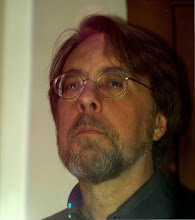
Today was Nietzsche's 164th birthday, and in my Nietzsche class we celebrated with a cake. This is UW student (and Nietzsche enthusiast) Andy Dibble cutting the cake. The picture on it represents Munch's great 1906 portrait of him. Two years ago I commented here on why people are still reading Fritz after all these years:

Surely there are many reasons. One is that he is one of the very few major philosophers who is just plain out-and-out fun to read. The only ones who even come close in this respect, in the whole history of philosophy, are Robert Nozick and Jose Ortega y Gasset.

Then there are the substantive reasons. Ortega says somewhere that, for most of us, the pleasure of reading is simply the pleasure of agreeing with someone. This is clearly not true of Nietsche. Whatever your views are, you will eventually see Nietzsche not merely disagreeing with you but actually ridiculing things you hold sacred. And making you laugh in spite of yourself.

Partly for that reason, I think that reading Nietzsche is actually good for your character. It's hard to imagine someone who has studied Nietzsche getting all shocked and huffy because someone disagrees with them. Students of Nietzsche are used to it. And more than that, they understand that it is actually good that there are radically different views out there. It creates space in which we can grow.

Thursday, September 20, 2007

Kurt Vonnegut: One More Thing....

I'd like to add one more thing to my earlier post about Cat's Cradle. The first time I read it, what impressed me the most was the idea that believing lies can actually be a good thing (or at least less evil than believing the truth). This time around, something quite different stood out. The book's end-of-the-world scenario I found really, seriously disturbing. It quite literally gave me nightmares. It's not just that it presents a vivid, plausible story of the complete annihilation of all life on earth. It's the point of view behind it. Spending any amount of time between Kurt Vonnegut's ears, at least as we experience it in this book, is really not very pleasant. (On thing you might get out of the ice-9 fable is a bit of insight into what it would be like to seriously be in the grips of global climate catastrophism. Really believing that sort of thing, should you ever be able to do so, would not be fun.)

People have often pointed out that one thing that is remarkable about this book is that it laughs its way through the end of the world. That's true, but this is not a healing sort of laughter. The impression it creates, for me at least, is one of more or less pure nihilism. The book ends with a creepily Jonestown-like scene in which we find that Bokonon has urged his assembled followers to have "the decency to die," leading them to commit suicide by touching their mouths with crystals that turn their bodily fluids to solid ice-9.

Nihilism, said Nietzsche, is the radical denial of value. It is the pouty teenager's murmur that life sucks. Reading this book reminds me of another Nietzschean theme: how easily extreme forms of moralism, such as Christianity and the closely related idea of socialism (secular Christianity, you might call it), lead to nihilism. Vonnegut was of course no Christian, but he was apparently some sort of Trotskyite.

What is the connection, you wonder? Here is one way to look at it. If you are a real socialist or honest-to-God Christian, you believe in a moral standard to which human beings cannot possibly measure up. Love your neighbor as yourself. Share and share alike with everyone. Care about the whole planet instead of caring about your own self. Shun material gain as the root of all evil. Human beings are apparently hard-wired to not act this way.

Eventually, you will notice this. If you happen to be a genius, this realization might drive you to become a brilliant social satirist, like Vonnegut. But what will the resulting point of view be? You really have a choice. You can choose life and reject your "principles." Then of course you are no longer a hyper-moralizer, a Christian or socialist. On the other hand, you can keep your principles and decide that life sucks. There are two types of hyper-moralist: those who have made the life-sucks choice, and those who have not yet wised up to the fact that, by their principles, all of humanity stands condemned. In Cat's Cradle, Vonnegut clearly comes accross as the post-disillusion, frowner-at-everything sort of socialist.

Darn! I ended up sounding more negative about the book than I meant to. Let me repeat that I really do recommend it. I think I got something out of it that many deny can ever come out of a work of art: genuine enlightenment. Of course, it wasn't the sort of enlightenment that the author intended ... but that's what great books are like!

Wednesday, June 20, 2007

In Nietzsche's Footsteps

In January I took part in a conference, "Interpreting Equal Respect" in the amazing Medieval Italian city of Pavia, in the state of Lombardy. Our genial host, Ian Carter, pointed out to me that the church of San Michele Maggiore (Google Earth photo at left), which was next door to the Villa Gloria a San ichele, the restaurant where we had dinner twice, was where the kings of the Lombard League were crowned here after they made Pavia their capital in 572. Actually, now that I have been able to do a little research, I see that these coronations must have been in the Lombard church that earlier stood on this site. San Michele was built in the late eleventh century. But it was plenty old enough to please me in any case. More importantly, the facade was decorated, not just with saints and angels, but with animals and weird monsters, now sadly eroded by time and attempts at cleaning, like swan-necked dragons and lion-headed men. They weren't designed merely to edify or browbeat the viewer, but to some extent to delight and entertain. It certainly is odd to think of Christians designing a church that way. It upsets my stereotype.

I decided try to make Romanesque churches the theme of the rest of my trip, in which I would visit coastal Liguria (Genoa and points south) as a grateful guest of my old friend, Valeria Ottonelli of the Università di Genova. Churches, plus soaking up the ambience the Nietzsche loved so much. That does sound like an odd combination, doesn't it -- Nietzsche and churches?

Here are a few pictures I took with my cellphone. They are small, uncropped, and badly exposed, but they're all I've got.


A vast area in the center of Genoa is Medieval, a labyrinth of twisting streets and narrow, cave-like alleys. No wonder they drive those funny little toy cars. (Well, there's also the whole conserving-petroleum thing.)


Through this inconspicuous door in a gloomy alley, with no sign to indicate what it was, we entered the most delightful candy store I've ever been in. I asked if we were going into the rear of the store. No, Valeria said, this is the store itself. Inside is a simple counter, with two women, obviously mother and daughter. Over their shoulders you can see the little kitchen which they made their wares: tray after tray of -- all sorts of things dipped in chocolate as dark as sin. My favorite was the chocolate-covered orange peel. The Italians know their candy. They are also the only tribe on Earth who know how to make coffee properly: "strong enough to float a horseshoe," as they used to say out west.


This is the Church of San Donato, in Valeria's neighborhood in the center of the medieval part of the city. It was built in the eleventh century, but the black and white striped portal, which unfortunately dominates the facade, was added in 1888.


Inside San Donato. There are several rooms that are basically an art museum, with paintings displayed simply as paintings. I asked Valeria about the guy who painted one of them, "The Holy Family." She said, "Why that's Paoli!" She seemed to be thinking, "Sheesh! Don't you know anything?" I hadn't heard of him. When she was growing up, they learned all about the Genoese painters (Genoa is her home town - how lucky can you get!), of whom this Paoli guy was one. For my part, growing up in Stockton California -- either there were no Stockton painters and writers, or they didn't matter. Probably the former.


The places that were most important to Nietzsche were a little further along the coast, on and around a little peninsula called either the Promontory of Portofino or the Promontory of Capodimonte. He wrote in Ecce Homo that the whole of Part One of Zarathustra, above all the character of Zarathustra himself, came to him while taking daily walks from Rapallo out to the tip of Portofino in 1881 and 82. Though he moved to Nice, further up the Riviera, after that, he did return to live in the area again. The preface to the second edition of "Dawn" was dated "Herbst des Jahres 1886," below the phrase"Ruta bei Genua." Ruta is a hamlet high on the slopes of the Capodimonte itself. The "Monte" is a huge loaf of dark igneous rock, pushed up to a height of 610 meters by tectonic action, which forms the spine of Portofino. Scattered on its craggy sides are stone houses, an occasional church, small orchards, and much half-wild forest. It's Nietzsche's kind of country. When he walked around the Capodimonte, he was indulging the same passion that had brought him to Switzerland: his love of mountains and climbing. ... Above you see Genoa, looking west from the west side of the Capodimonte. The stuff that looks like clouds on the far horizon is actually the snow-covered Alps.


Rapallo is not what it used to be. Valeria said there is now an Italian verb, "rapallizare," which means "to build up a once quaint and interesting place as a destination for swarms of tourists." We drove to Rapallo, got an eyeful of the tourists, then headed back to the area near Ruta. Valeria parked her cute little yellow toy car near the hamlet of San Rocco, and we started down stone-paved path toward the water. We saw this little shrine along the way.

This is the wall of a sort of snack bar, set in a little cave in the rock of the pathway. I noticed this inscription. As you see, it says "dai mûagetti." "Good Lord!" I said, "What language is that?" Valeria said, "Genovese!" (I haven't been able to figure out what that phrase means.) Genoa has a regional language! It's said to be a remnant of the language of the ancient tribe of the Ligures, who were here before the Romans. This is one great virtue Europe has: the localities are often very, very local. Like different countries.

Further down the path is the Romanesque church of San Nicolò di Capodimonte. Above, Valeria approaches it on the mountain path.

The main altar of San Niccoló. Here you see Saint Nicholas himself, in his pre-Thomas-Nast days. He already has his red robe trimmed in white, but hasn't lost his pointy bishop's hat.

View just to the left of the shot above this one. Mary's halo was the only light in the place that was turned on.

On one wall of the church, not shown, it said "Ave Maris Stella," hail star of the sea (Maris Stella being an epithet for Mary, from a Medieval hymn). For centuries this church served the fishermen who launched their frail wooden boats from the rocky shore just below us.


Though we were only about four miles from the congestion of Rapallo, this whole area was deserted. While we were in the church, no one else was anywhere in sight. Though the doors were unlocked, there wasn't even a priest or attendant anywhere about. Near the door of the church was a table with brochures and postcards, and a box to pay for whatever you took. (I now have a Saint Nicholas medal on my key ring.) I was amazed and touched that these people, total strangers, were trusting me not to rob them blind. I hope it stays this way too: just the way it should be.

Returning to Genoa, I briefly visited the Genoa Cathedral. Valeria waited outside. Cathedral? She'd seen cathedrals! As you can see, the facade is not Romanesque but snazzy new Gothic. The building was partially rebuilt and modernized when it was damaged by a fire caused by a fight between the Guelphs and the Ghibellines. Darn those Guelphs and Ghibellines!


So that was my visit to one of Nietzsche's favorite winter haunts. Hope you didn't mind the pictures too much!

Thanks Valeria! You're the best!

Sunday, October 15, 2006

Happy Birthday Friedrich!

Today is October 15th, the 162nd aniversary of Friedrich Nietzsche's birth, a day that will recur infinitely many times (already has!), each one as perfect in eternal joy as all the others.

The amazing thing about this is, not the Eternal Recurrence thing, but the fact that after 162 years, we are still reading him. Indeed, interest in him shows no signs of fading. If anything, it's on the rise! Why?

Surely there are many reasons. But one is that he is one of the very few major philosophers who is just plain out-and-out fun to read. The only ones who even come close in this respect, in the whole history of philosophy, are Robert Nozick and Jose Ortega y Gasset.

Then there are the substantive reasons. Ortega says somewhere that, for most of us, the pleasure of reading is simply the pleasure of agreeing with someone. This is clearly not true of Friedrich. Whatever your views are, you will eventually see Nietzsche not merely disagreeing with you but actually ridiculing things you hold sacred. And making you laugh in spite of yourself.

Partly for that reason, I think that reading Nietzsche is actually good for your character. It's hard to imagine someone who has studied Nietzsche getting all shocked and huffy because someone disagrees with them. (You know, the way Madison lefties get when you tell them you are for gun-owners' rights.) Students of Nietzsche are used to it. And more than that, they understand that it is actually good that there are radically different views out there. It means we can grow.

Come to think of it, it's hard to imagine somebody who has read Nietzsche coming up with something as nauseatingly pious as the UW Office of the Dean of Students Think Respect Program. I don't know who came up with that monstrosity, but they really ought to sit down and read Nietzsche. Now! (And joyously partake of a hotdog on Friday.)

Saturday, October 14, 2006

The Nietzsche Family Circus

The Nietzsche Family Circus is a web page (tip of the sombrero to Paul Hsieh here) that juxtaposes a randomized Family Circus cartoon with a randomized Nietzsche quote.

The illusion of quote-to-picture relevance is laugh-out-loud funny. This illusion, I think, is closely related to a classic idea from film theory, the Kuleshov Effect, in which a given shot is interpreted, sometimes with startling results, in terms of neighboring shots. This is one of the many illusions that, according to my favorite theory, are always going on when one is watching a film. An even more closely related one is the illusion in virtue of which we hear various sounds in the sound track as if they were coming from various areas on the screen, and not out of a mesh-covered box next to it.


And this, my young friends, shows how powerful a meaning-finder the mind is, so powerful indeed that it often finds meaning where there is none. And thank God for that! Also, I suppose, thank that for God. That could be one of the origins of religious experience, after all.