Friday, July 24, 2009

Gatesgate

I find it hard to believe that American conservatives are defending the Cambridge police for arresting this man, a fifty eight year old scholar who walks with a cane, for speaking angrily to a policeman in his own home (ie., on his front porch). The right wing talking heads are saying that Gates was the wrongdoer here: the wrong he did was that of being "disrespectful" toward an officer of the law.

That is not a crime and should not be. Being "respectful" toward someone because they have a badge may or may not be prudent, wise, or moral, but it clearly is not your legal duty and should not be.

What kind of country would this be if "disrespect" for an officer of the state were a punishable criminal offense?

And surely, no sounds you are making on your own property, provided the sheer decibel level is not disturbing others, should be treated as "disturbing the peace" or "disorderly conduct."

Three things about this case seem obvious to me:

1. Prof. Gates should not have responded with instant anger with police answered a report of a break-in at his home.

2. Barack Obama should not have said that the police acted "stupidly" before knowing the facts. (He seemed to think that Gates was being arrested as an intruder after having proved that he wasn't one.)

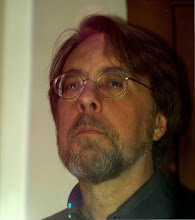
3. Officer Crowley should not have arrested this man, taken him away in handcuffs, and forced him to submit to the above mug shot, simply for speaking angrily to a police officer in his own home.

Of these three, the worse offense by far -- by far -- is the third, because it is the only one that involves an assault on the person of a human being who is not violating anyone else's rights.

The fact that there are conservatives who don't get this seems to show an unbecoming desire to bow and scrape before authority.

Wednesday, July 22, 2009

Obama Health Care Speech: Pure Advertising

I've been lazy about following what the Democrats and the President are doing with "health care reform." I just watched Obama's big health care speech, hoping he would remedy my ignorance.

I thought there was a chance that he would do the FDR fireside chat thing, clearly explaining what is wrong and just how he will fix things.

From that point of view this hour was a complete waste of time. Here are my notes on what he said:

His plan will limit the amount the insurance companies can “force you” to pay (apparently referring to deductibles). You will be able to keep your own health insurance if you are insured.You will be able to keep it if you lose your job.If don’t have insurance, you will “be able” to get some. It will not increase deficits. 2/3 of cost will be paid for with waste removal, and with getting rid of some current health-related subsidies. The other one 1/3 will come from some undetermined source other than tax increases to the middle class and going further into debt. He mentioned raising taxes on people who make one million dollars a year. He accused an unnamed Republican of wanting to “break” him instead of seriously trying to reform the medical system. He also complained about something some other Republican said about him, I can't remember what. [BTW, shouldn't it be beneath the President's dignity to be whining about people criticizing him?].

In his opening remarks, that’s pretty much all he said.

He then answered ten questions (which gives you some idea how long his answers were).

To Jake Tapper’s question about what sacrifices we will have to make, he said that we will to give up paying for things that don’t make us better. The first example gave he gave was running new tests when you go to a new doctor instead of using the test your last doctor did because they don’t have a record of the old test. The other was that he will make doctors use the cheapest form of a given medication.

He twice mentioned that he inherited a deficit from Bush. And claimed that the “old policies” would have caused a bigger deficit than the enormous one that he contributed [no explanation of this stunning comment was offered, and the press did not question him about it].

All he did was to tell us what good effects the plan will have, and how it will have no costs at all for the overwhelming majority of Americans. Effects, not causes. This is exactly the sort of information we get when we watch TV commercials.

The trouble is that we don't need to know how most of the products advertised on TV work, while we do need to know the details about how this overhaul of the medical system is supposed to work. We need to know that in order to rationally evaluate what he is proposing. Basically, he is just saying "trust me, this will have only good effects, and on a massive scale, and will cost you nothing."

In my opinion, this shows contempt for the intelligence of his audience, for two reasons. First, he is simply not engaging our reason at all. He is merely making a sales pitch that assumes we will take his word for whatever he says. The other reason is of course that only an utter fool would believe in massive good health care effects that have zero costs (that can't be shoved onto rich people).

The only question remaining is whether the American people are sensible enough to realize that he has not told them anything that would pursuade a rational being. I think they are.

Sunday, July 19, 2009

The Golden Age of Human Decency

I have been listening to Prof. Jeremy Adams' excellent lecture series, Neolithic Europe (Teaching Company, 2005). I am fascinated by his account of the transition from the paleolitic (hunter-gatherers) to the neolithic (agriculture and pastoralism), a sort of cultural earthquake which began around 10,000 BC (end of last ice age) in the Middle East. It involved, says Adams, a "moral revolution" in addition to the more obvious technological one. His account confirms something I have long suspected: that the preceding era, the age of hunter-gatherers, was the golden age of human morality, and that this "revolution" was a terrible fall from grace, whose horrors still afflict us today.

Here are the main points I take away from his account (which is mainly based on studies of hunter-gather cultures that survived into modern times):
The paleolithics lived in tiny groups in which they dealt with others on a face-to-face basis. In such a world, individual human life is precious. Even the life of a malefactor has value. These cultures try to avoid imposing the death penalty, and even exile is viewed with distaste.

Throughout the paleolithic and well into the neolithic, war as we think of it was rare to nonexistent. (I would say there is a big ethical difference, which is not just a matter of degree, between raiding and feuding on the one hand and war on the other.)

Paleo cultures were egalitarian. Decisions about the group were typically made by the elders, who could be men or women. Decision-making authority was thus based on age, which indicates possession of natural values such as experience and relative wisdom.
Paleo social organization was often either matriarcal or matrilineal or both. Well into the neolithic, the principal deity was often female.

With the neolithic came a population explosion and people became more expendable. [They lose what Jeffers called "the value of rarity."]

At the same time, decision-making authority is based more and more on brute force (the strong man) and inheritance (ie., on convention) instead of natural merit. Broad, long-range social organization begins.

Meanwhile, stores of neolithic food surpluses become thief-magnets. People use the new, coercive forms of organization to steal the food of others. Proto-states arise and, with them, organized warfare. Large numbers of morally innocent human beings are coldly slaughtered.

Among the goods stolen in wars are human beings. Slavery is born.

Life-long monogamy is the paleo form of marriage. In the neo world, polygamy arises: mainly polygyny, which priviledges men. It also increases class inequality, as it draws potential mates away from lower-caste men. If it spreads far enough, many lower caste men will not be able to reproduce at all. [I also wonder if it also tends to propagate the thuggish traits that enable one to achieve a position of artificial privilege.]

Beginning in the neolithic, there is a tendency for human wealth, regardless of who produces it, to be channeled to a privileged few. The first taxes are collected.

Because people now live in the same place from generation to generation (no need to follow the mastodon herds) they acquire special holy places (eg., Stonehenge) where they can go and perform the same repetitive rituals in the same place over and over again. Organized religion begins to displace the individualistic spirituality of the paleos. [I would add that this makes possible priestly castes, with coercive power undreamt of by the medicine men of the paleolithic.] Eventually, the religious practice of human sacrifice [the ultimate expression of the subordination of the individual to the group] begins.
At the heart of the moral revolution of the neolithic is a sort of moral anesthesia, caused by a number of factors, not the least of which is the organization of activity under that the Nazis called the Führerprinzip. It is an occasional convenient blindness (which could never become constant lest culture itself should collapse) to the inviolability of the individual.

Tuesday, July 14, 2009

Sotomayor: Decisions or Speeches?

As everyone knows, Judge Sotomayor's legal opinions are much more moderate than her off the bench speeches and writings. Which should we believe?

Clearly, we should believe the off the bench statements, for a very simple reason.

I'll give you a clue: the same profile -- off the bench writings much more scary than on the bench -- also fit Judge Robert Bork at the time of his confirmation hearings. Why do you suppose Democrats were having hot flashes about his scholarly writings?

The life of a circuit or appellate court judge is very constrained. Of course, in this rule-bound, overregulated world, we are all constrained in a way. But there is a big difference between me and one of these judges.

I am sure the village of Oregon WI could come over right now and "write me up" for several violations I am committing on my property without my even knowing I have committed them. This is true of most Americans who own anything. There are several reasons we are not all paying fines, and possibly doing time in the pokey: that a) the magistrates just don't have the resources to enforce all the rules and regulations that are on the books, b) they are actually decent people and don't want to harass us, which means that c) they don't really care what we do, as long as the mischief is not too great. We are protected against the massive, unpredictable, and incomprehensible tangle of rules by our own insignificance.

With a judge it is very different. There are all sorts of ways a judge's decision can be wrong, so that there are plenty of rules that apply to them, just as to us. But there is a big difference: in a judicial decision, there is always a loser, and the loser always has a strong motive to appeal if they can find a relevant flaw in the decision. When your judgment loses the appeal, the higher judges give a detailed account of why you were wrong, and I've read some stinging ones. It must feel like being a law student and having your exams graded in public.

Writing opinion pieces and giving speeches is obviously very different. There are few constraints and little enforcement. Sure, someone may disagree with you and say why. But you are free to ignore them, and the level of rigor in what they say may be such that you won't take them very seriously if you don't.

Of these two, judging on a lower court and writing opinion pieces, judging on the Supreme Court is a lot more like the second situation than it is like the first. There is no appeal from its decisions. They can overrule themselves, but how likely is that? And even if they do, and it is not just a matter of the justices changing their minds, it is not like being publicly spanked by their superiors.

Supreme court justices are like law students who grade their own exams.

To see how Sotomayor will act on the SC, look at how she acted in the situation that most resembles it. If she suddenly retracts all her extreme pronouncements, as she did today, the big question is which do you believe: the pronouncement or the retraction?

Friday, July 10, 2009

Mediocrities or Freaks?


I think it was Michael Kinsley who said "a gaffe is when a politician tells the truth."

I don't want to endorse everything King is saying here by a long shot. I wouldn't call MJ a "child molester" -- wasn't he found not guilty in a court of law? And it certainly isn't true that there is nothing good about him. As comments on Michael Jackson the human being, these are way over the top.

But on the wider cultural issue the Congressman has a point.

Tocqueville and Mill worried that the transition from aristocracy to democracy that was then under way would bring a certain change for the worse in the outlook of the average person. Before the revolution, when we looked outward, beyond our village at the greater world, who did we see? There was of course the faceless herd of undifferentiated individuals like ourselves. But we did not find them very interesting. Above this mass, however, there were a few holy or noble individuals who were vividly differentiated: the Pope, the tribal chieftain, the local lord, the king. There was no one else to get our attention. (Ortega claims that "noble" originally meant simply "well known.") We thought of these people as representing ideals of holiness or heroic prowess. (We were wrong about that, of course, but that is irrelevant to my point here.) That was one of the reasons we sometimes sat around the fireplace telling stories about their exploits.

After the revolution, society does not systematically present any one type of person to our view. I used to think that this means that under a democracy we will tend to pay attention to mere mediocrities -- more exactly, to celebrities, ie. people who are well known on account of their well-knownness. Obviously, that is to a large extent what actually did happen.

But this weird MJ obsession of ours does not fit this pattern. He was not a mediocrity at all. No, I think the reason he is getting so much attention is that he was, simply, a freak. Sorry, but there's no nice way to say that without blunting my point. And you have to admit that this is indeed what he was: a seriously weird person. For some reason, we seem to find this endlessly fascinating. We just cannot get enough of his wonderful weirdness.

Here I think King raises the right question. What does this fascination say about who we are, about our spiritual depths (if any)?

If there is some human being or other person (eg., a god) that we want to contemplate day after day, it should be because of positive things about him or her.

Here is another place where I differ from King. He is a politician and government employee, and his heroes are government heroes: fallen military personel and fire fighters. My own heroes are a very different bunch. I think of them as people who make things, whether what they make is a philsophical theory or a better mousetrap. (Come to think of it, the ideal philosophical theory would be a sort of spiritual mousetrap.) These are the creators in the realms of art, science, technology, and industry.

Whether you prefer my sort of heroes or Kings, or have yet another preference, shouldn't we try to pay more attention to them? More and more, that seems to mean letting your TV cool off for a while.

Saturday, July 04, 2009

Sarah: A Duty to Serve?

If Sarah Palin thinks she can avoid "political blood sport" by resigning as governor of Alaska, she's got another think coming. The knives will stay out until she is no threat to Obama or anyone else in the political establishment.

One of the many negative things that have been said about her in the last 24 hrs. seems pretty silly to me. Several people, including Sen. Karen Murakowsky and the Democratic National Committee, have said in effect that it is morally wrong of her to resign and so "abandon the people of Alaska." After all, the voters commanded her to serve one full term, so she has to do it.

In the first place, these are people who feared and hated her. Their pretense at being upset that she is leaving is pretty funny. I hereby nominate them for the Louis Renault Memorial Award.

But the main point is this: Once upon a time there was a group of people who had a duty to labor for others. They were called slaves. Today, most Americans have a work arrangement called "employment at will," which means that either employer or employee can terminate their relationship at any time and without cause. Some people think employers should have fewer rights than this, that it should be harder to fire people. Nobody thinks employees should have fewer rights, that it should be harder to quit. Why not? Well, why are you against slavery? Some of the same reasons apply here.

Maybe the idea -- if there really is an idea here -- is that it's different if your employer is "the people." Vox populi, vox dei. But I don't think the people rule by divine right, any more than Louis XIV did. The people are just that -- people, like any other employer.

Added later: In my amateur opinion, the best discussion I've seen for Palin's decision to quit is here. I'll give you a clue: if this analysis is correct, then it may be impossible for outsiders to break into the political establishment unless either a) they arouse no strong hostility in insiders and their dependents, or b) they are wealthy. In other words, we are doomed.

Thursday, July 02, 2009

The Christening Scene in The Godfather


I've posted before about the use of Bach's organ works -- especially including the great Passacaglia and Fugue in C Minor -- in this much-praised and highly effective scene. A recent anonymous commenter on that post has gotten me thinking about it again.

I'll comment in greater depth later, but for now I wanted to point out a couple of things about this scene that may seem minor to others but I find annoying.

First, this way of using Bach's organ music -- to represent the dark, sinister corners, the twisted recesses, the dripping dungeons of the human heart -- has long been a movie cliche. The first time I played one of them on a tape player for my son Nat - I think he was seven or eight at the time - he said "That's Dracula music!" He had already picked up on the cliche.

Admittedly, the organ work that is usually used for this purpose is not the Passacaglia but a related work, the Toccata and Fugue in D Minor, which Bach wrote shortly before the C Minor. That's the one that the Herbert Lom plays in his sewer lair in the Hammer Films version of The Phantom of the Opera (1962). (Scroll forward to 3:00 below.)


It's also played by Captain Nemo (James Mason) in Disney's 20,000 Leagues Beneath the Sea (1954). Here is Nemo, twisted by the loss of his family into a monster with no purpose in life by death and destruction -- perfectly represented by Bach's creepy, sinister music! Right?

Wrong! That's the other annoying thing I wanted to bring up. Bach was about 21 o 22 years old when he wrote these two works and both, to me, are full of the exuberance of youth and love of the magnificent universe God has created. There is nothing sinister or satanic about them. In discussing the C Minor in his magisterial Johan Sebastian Bach: The Culmination of and Era, Karl Geiringer uses words like "dignity," "strength," 'intensity," "power," and "magnificence." He neglects entirely to mention malevolent creepiness.

A far better interpretation of Bach than these other films is embodied in this sequence from Disney's Fantasia. Notice that Satan and his works are far, far away:


I know this might sound like an odd thing to mention as a criticism of The Godfather, rather like criticizing a Bond car chase scene for promoting unsafe driving practices. It seems like an extraneous consideration, somehow. But I think that, if a work of art contains a gross and actually rather stupid misinterpretation of another work of art, it is at least worth mentioning.