Friday, August 22, 2008

The Zen of Staring at Scenery

Here are some images from our recent trip to Sylvania, in the Michigan Upper Peninsula.


I like it most when no one comes
Preferring fallen leaves and swirling flowers for company.
-- Ikkyu


Do not follow dusty paths in search of wisdom. If you cannot find the truth where you are, where do you expect to find it?
-- Dogen


Meditation and water are wedded for ever.
-- Melville


What is of all things most yielding
Can overcome that which is most hard.
-- Lao Tse


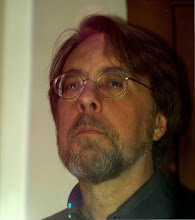
This is not a face.


A Crazy Cloud, out in the open,
Blown about madly, as wild as they come!
Who knows where this cloud will go, where the wind will still?
-- Ikkyu


I cannot come nearer to God and Heaven
Than I live to Walden even.
-- Thoreau

Sunday, August 17, 2008

Sylvania Wilderness: Truly Uncommon

My wife Deborah and I are heading for a camping trip in the Sylvania Wilderness Area, the largest virgin forest in Michigan. This place has never been logged. It is truly the forest primeval that Longfellow wrote about, the one with those murmuring pines and hemlocks. This is exactly to sort of country where his fictionalized Hiawatha lived and loved. To the left you see a very small part of this world. (Part of a rotting log.) When I visit these northern woods, I think of them in terms of little details, because that's where the beauty is, it seems to me. To a westerner like me, the big picture is kind of underwhelming. For those who insist on a larger view, one is included below.

How did Sylvania escape being logged, in a part of the country that typically shaved, clearcut, logged to death by "corporate greed"? That's a very interesting story. Unlike the land that was raped and abused, Sylvania was private property. It was owned originally by a group of US Steel execs (this was iron mining country) who called themselves the Sylvania Club. Some of them had logging interests of some sort, but they didn't wreck this piece of land because it was theirs. They built a few lodges on it, entertained guests like Bing Crosby and Dwight Eisenhower, drank, gambled, fished, and minded their own business. During prohibition, they stored their booze on Whisky Island in Clark Lake. (It is just beyond the spit of land in the picture below.)

Then, in the sixties, the Sylvania tract became government land, and a classic tragedy of the commons began to take shape. People rushed in to harvest the huge, almost unexploited fish population. Old timers tell stories of a boat that tipped over and sank because it had too many fish in it. Finally the Forestry Service slapped on some reasonable regulations. Fishing here is catch and release now, and camping now is in designated sites only. You have to reserve a spot and pay a fee, just as if this vast tract of primitive land were a hotel. But at least you can get some degree of privacy and a simulacrum of what it once was: perfection.

Tuesday, August 12, 2008

Tragedy of the Anticommons: Too Much Ownership?

Writing in the New Yorker, a certain James Surowiecki tells us he finds a very insightful idea in a new book, The Gridlock Economy, by law professor Michael Heller. Heller calls the idea the tragedy of the anticommons. It's supposed to be a sort of mirror reversal of the "tragedy of the commons. " This idea, if Surowiecki is reporting it rightly, sounds very wrongheaded to me. But it sounds like just the sort of idea that some people would take seriously, so maybe it is worthwhile to say something about it here.

My favorite example of the tragedy of the commons is from American history. In the 1870s, one decade, the North American bison were nearly hunted to extinction. Professional buffalo hunters would shoot buffalo just to pack their tongues in barrels of salt and ship them east, where they would be sliced to make sandwiches. Dairy cows, on the other hand, are not used in this wasteful way. Farmers do not shoot their cows to utilize some small part of their carcases, leaving the rest to rot on the ground. Why not?

The answer is of course not in the nature of cows and buffalo, which are closely related species, nor does it lie in the fact that humans suddenly become greedy when faced with one sort of beast and not when dealing with the other. The explanation lies in the position that the two sorts of animal occupied in the structure of property rights.

The cow is owned. A farmer who uses it wastefully is wasting his or her own cow. Nothing like this is true of the Buffalo. The buffalo, in those days, was in a common pool that all may exploit, with few or no penalties for wasteful overuse.

Here is how Surowiecki typifies the tragedy of the anticommons:
In the second decade of the twentieth century, it was almost impossible to build an airplane in the United States. That was the result of a chaotic legal battle among the dozens of companies—including one owned by Orville Wright—that held patents on the various components that made a plane go. No one could manufacture aircraft without fear of being hauled into court. The First World War got the industry started again, because Congress realized that something needed to be done to get planes in the air. It created a “patent pool,” putting all the aircraft patents under the control of a new association and letting manufacturers license them for a fee. Had Congress not stepped in, we might still be flying around in blimps.
In the tragedy of the commons, the problem is the common pool. In the tragedy of the anticommons, it is the solution. The former, Surowiecki says, is a case of too little ownership, and the latter is a case of too much ownership. The former leads to overuse and waste, while the latter leads to underutilization and missed opportunities. The latter sort of tragedy is possible because ownership includes a veto power: no one can take what is mine unless I say so. When there is too much ownership, this leads to gridlock and prevents cooperation.

Does this make sense?

I'd say the short answer to that question is "no."

To begin with the obvious: To say that we would be riding blimps today if Congress had not put aviation patents into a common pool is just plain silly. The idea that these companies, assuming each really did have ownership of some essential component of an airplane, would prefer using their veto power to cooperating -- that they would prefer poverty to riches -- really strains credulity.

To take a somewhat less obvious point: I have not researched this case, but I would be willing to bet that it was actually not clear who really held legal ownership of the various ideas involved. After all, "who owns what?" is the question these judges were being asked to decide. To the extent that this is what is going on, the problem was that people's property rights were unclear or indeterminate. Does that sound like a case of too much ownership, or too little?

The fundamental problem with the "anticommons" idea is that its main point, that the common pool is the solution to this problem, is generally not true. In the overwhelming majority of cases in which this "problem" occurs, it is the property rights that are the solution.

Consider for a second the situation in which this supposed problem pops up. There are several people such that: 1) each has rights, but 2) they all have different rights, and 3) to make optimal use of these rights each must make use of the rights of others, and yet 4) they all have a veto power against the others doing so.

This description may not be immediately recognizable when put this way, but what I have just described is daily life in a developed market society. As Adam Smith said, "When the division of labour has been once thoroughly established, it is but a very small part of a man's wants which the produce of his own labour can supply." I am standing at the checkout counter and the supermarket. The market owns a jar of peanut butter, and I own a dollar bill which I have earned by my labor. The market needs money, and I need peanut butter. And yet we each have a veto power over the other's just taking what they need. What happens next? Obviously, we trade, precisely because we do have this veto power. They can't have my dollar bill unless they give me the peanut butter, and I can't have the peanut butter unless I give them the dollar bill. Trade is the solution to our "problem" and, because trade presupposes property rights, this means that ownership is not the problem but the solution.

Hilton for President

See more funny videos at Funny or Die


I take back every bad thing I've said about Paris Hilton. Come to think of it, I've never said anything about Paris Hilton at all, but you get the point. Anyway, she's given us all a lesson as to what it would mean to make a classy response to an insult. She didn't sue, she didn't whine. She simply topped them. Plus, her energy policy doesn't seem half bad to me.

Monday, August 11, 2008

The Olympics: To Boycott or Not? (A Re-Post)

I thought it would be timely to repost this, as it might be more interesting now than when it was written.


Thursday, April 24, 2008

I'm not talking about whether our athletes should compete in the games. I guess by now it's obvious that Jimmy Carter did no one any good by barring the US athletes from going to the Moscow games in 1980. I'm also not going to talk about whether you should tune in to the games on your TV. Whether you do or not will make no difference to the ChiComs and their vicious, brutal dictatorship.

What I am interested in is the issue of going there to be a spectator. More generally, I'm interested in the ethics of tourism in a country with a seriously wicked government. More generally still, there is the issue of doing business in such countries. Tourism after all is business.

There are two arguments you hear most often, as in this article. On the one hand, trade supports peace, understanding, and change. Throughout history, when goods cross borders, so do ideas. If we stop communicating with the ChiComs, that will not make them more likely to take our ideas into consideration, but less so. On the other hand, when you enter such a country as a tourist, you will spend money there, and some of it will inevitably benefit the government. Believe me, these people are very good at converting potential sources of power into actual ones. We know this, because they are after all still securely in power after all these years.

It may be obvious from the way that I put them that I agree with both of these arguments. They are after all mutually consistent. Tourism in an oppressed country can have both positive and negative effects on oppression.

Our issue arises, really, because you never know for sure which effect is stronger. Did you go there? Maybe you made things worse! Did you stay out? Maybe going in would have helped make things better!

At a minimum, this means that if you do go, you have a moral obligation to take steps to enhance the chances that the anti-oppression effects of your activities outweigh the pro-oppression effects. What steps? Well, you have to deliberately bring about good effects and deliberately avoid bad ones.

If you do go to the Olympics, do not attend the opening ceremonies. To see why, rent the DVD of Olympia, Leni Riefenstahl's masterful documentary of the 1936 Berlin Olympics. Watch the opening ceremonies. See Hitler reviewing the athletes as they march past, saluting him. You'll be stunned to see the French team going the extra mile in showing respect, giving the Fuehrer the straight-armed Nazi salute. It's a movie viewing experience that I for one will never forget. Part of the function of these ceremonies is to honor your hosts. Systems like this one thrive on such honor, and feel it bitterly when it is withheld. Doesn't their recent behavior make this more obvious than ever? So withhold it.

If there are dissident groups to which you can contribute, make a contribution.

Make sure that your contribution to the flow of ideas is positive. Many people have gone into countries like this and made the intellectual climate much worse. Beatrice and Sidney Webb, Joseph E. Davies, and Walter Duranty went to Russia and came back reporting that Comrade Stalin was a great humanitarian who was building a workers' paradise. The likely effect of their visits was to confirm the RussComs in their nasty ways, deepening and prolonging their oppressions.

Of course, it makes a difference where you spend your money while you are there. Some of the implication of this are obvious. Try to avoid spending it in ways that enhance the amount that gets into the hand of the government. Spend it in the private sector, if you can.

Here is another implication, one that is not so obvious. One of the functions of a system like this is to create a docile, easily-exploited work force. If you go there and simply pay the "market" price for labor (what market? the price of labor is artificially low -- that's the point!) then you are actually profiting from the system. Stealing, in fact. As long as you are dealing directly with a private service provider, then, pay extra. Tip big.

I'm sure there are other things you can do that I am just not clever enough to think of at the moment. The main point, though, is that you cannot go into a place like that and think that this is automatically a good thing. It just isn't. You ought to try to make it good.*
__________________________________
* Unlike the Prime Minister of England the Chancellor of Germany, the Prime Minister of Poland, and the President of the Czech Republic, George W. ("China's Bitch") Bush will be attending the opening ceremonies. Until he is responsible for something like the burning of Washington, GWB will not have overtaken Jame Madison for the position of Worst President Ever, but it ain't over yet. He's inching closer and closer.

Thursday, August 07, 2008

Endless Summer

Nat and I are on a car trip that is taking a lot longer than I thought it would. By now, it is starting to feel like one of those dreams where you are trying to get away from the monster and you can only run in slow motion. Except that there is no monster, only the broiling sun and the beautiful, brutal, gloriously empty West. (The fact that our air conditioner is broken and can't be fixed on the road enhances this powerful aesthetic effect.)

To the left, you see an area called "Little Park," an island of sagebrush in the vast lava flow of the Craters of the Moon Nature Preserve in Idaho. (Click to enlarge.) I figured I had to go there just because the name was so cute. Actually, as it turned out, the Little Park is only parklike in comparison with the desolate chaos of the lava beds that surround it.

Tuesday, August 05, 2008

The Ruby Mountains: No Longer Unknown

Last week, Nat and I, still on the road today, visited Nevada's Ruby Mountains on the way to our ultimate destination in California. I first found out about the Rubies when Backpacker Magazine published an article, "The Ten Last Unknown Places." It featured a tantalizing couple of pages about this isolated range and an eye-popping photo of Liberty Lake (love that name!) at dawn. No, the irony of this is not lost on me. When a magazine with a circulation of 340,000 describes you as "unknown," you are ipso facto not unknown.

Sure enough, the area around Angel Lake Campground is now a nice place to meet people and make friends, but utterly ruined as a place to find Nietzschean high mountain solitude. If you want to shriek from your crags without being molested by mental health personnel, you'll just have to go elsewhere.

Walking a couple of miles on the path into the Rubies from the end of Lemoille canyon on a weekday, we met over a dozen parties who were likewise walking the path. The Rubies are, however, stunningly beautiful. To the left is a picture that, I kid you not, I took as I sat at the picnic table at our site in the campground. I suppose that this means these mountains can't be unknown, even aside from Backpacker's lovely little writeup. You can't look for solitude in a place that is picture-postcard-beautiful (hat-tip here to Deborah Hunt). At least not in the lower 48 and Hawaii.

To the right you see the Sierra basin that was our ultimate destination in California. Near the left edge, on a pile of white granite, you can see a sliver of blue showing through a stand of pine trees (click to enlarge). This is "our" lake. I've been going there since 1969 and I have always had it to myself. It may not have the Rubies' fetching looks, but it really is unknown. And it has other virtues as well, enough of them to enable the well-meaning folks at Backpacker to ruin it if they find out about it. I may post about it later but, no, I won't be telling you what the place is called or where it is. Sorry. I've done some dumb things in my time, but I am not a complete idiot.

Well, back to the road!